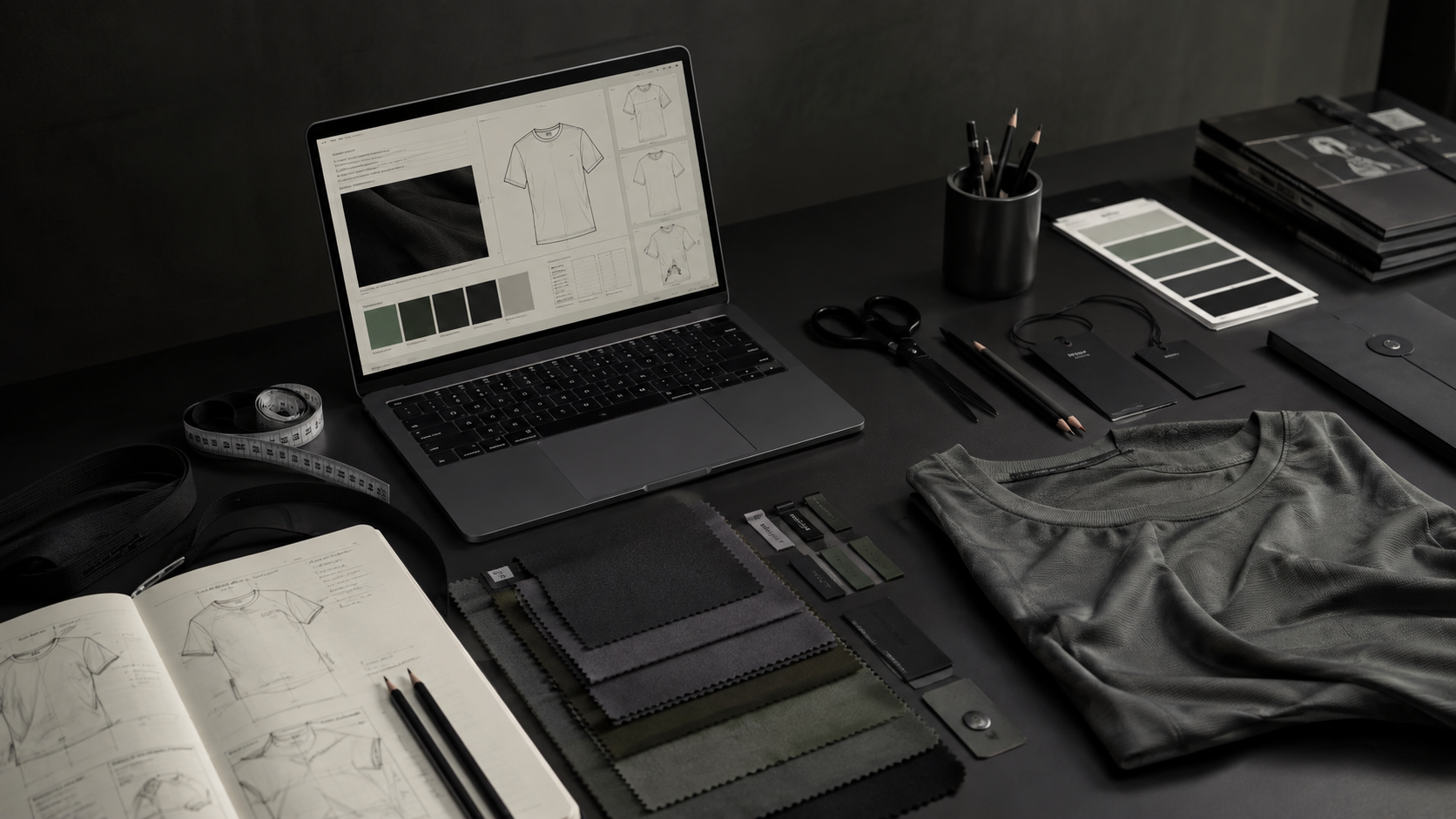
Every activewear brand on the shelf today started as a spreadsheet, a mood board, and a founder who was tired of wearing someone else's logo to the gym. The gap between that starting point and a finished product hanging in a store — or shipping out of a warehouse — is almost entirely a manufacturing and sourcing problem, not a design one. Most people who want to start an activewear brand already know roughly what they want it to look like. Far fewer have thought through how it actually gets made.
This guide walks through the decisions that matter in the first three to six months: picking a niche, choosing your first product line, understanding minimum order quantities, deciding how involved you want to be in the design process, and getting through your first production run without the surprises that catch most new founders off guard.
The activewear category is broad enough that "I want to make gym clothes" isn't a strategy — it's a starting point. Before you contact a single manufacturer, get specific about who you're building for and why they'd choose you over an established name. A few working examples of real niches inside activewear:
Your niche doesn't need to be permanent — plenty of brands widen their range once the first collection proves itself — but it needs to be specific enough to guide fabric choice, price point, and who you're marketing to on day one.
New founders often want to launch with a full range — leggings, sports bras, tanks, hoodies, shorts, joggers — in one go. It's the single most common reason first orders get delayed or blown out on budget. Every additional style means another pattern, another fit sample, another round of approvals, and another line item eating into your minimum order budget.
A tighter launch works better in almost every case: one or two hero pieces, produced well, in a small colour range. A leggings-and-sports-bra capsule, or a single hoodie style in three colourways, gives you something to sell and photograph properly while you learn how your supply chain actually behaves — lead times, communication style, how closely samples match your revisions.
Cutting your first order down to two or three SKUs instead of ten typically shortens your sampling-to-shipment timeline by several weeks, simply because there's less back-and-forth to manage.
Minimum order quantities in sportswear vary enormously depending on customization level. A basic compression legging in a stock fabric with a heat-transfer label might carry a lower MOQ than a fully sublimated design cut from a custom-printed fabric roll, because the printed fabric itself has its own minimum yardage. As a rough rule: the more custom the fabric or print, the higher the minimum, because the factory is committing to produce material specifically for you rather than pulling from stock.
Before approaching manufacturers, work backwards from your budget. Decide what you can realistically spend on a first production run, factor in sample costs (which are separate from bulk pricing and almost always necessary), and leave room for shipping, duties, and a packaging run. Founders who go in with "what can I get for $X" instead of "I want 500 pieces" tend to get a more useful first conversation with a supplier.
These three terms get used loosely, but they describe genuinely different working relationships:
For a first-time founder without an in-house designer, ODM combined with private label is usually the fastest and most affordable way to get a real product to market. We cover the distinction in more depth in our guide to OEM vs ODM manufacturing.
The manufacturer relationship you build on your first, smallest order is usually the one you'll rely on for your fifth, much larger one.Elevatex Editorial Team
It's tempting, especially on a tight budget, to skip straight to a bulk order based on a factory's photos or a fabric swatch. This is the single most expensive shortcut a new brand can take. A physical sample tells you things a spec sheet never will: how the fabric actually drapes on a body, whether the compression grading is right, whether the stitching on a waistband holds up to a hard stretch test, whether the colour matches what you approved on screen.
A responsible manufacturer will build in at least one sampling round — often two, if adjustments are needed — before committing to bulk cutting. If a supplier is pushing you straight to bulk production without a sample, treat that as a warning sign rather than a time-saver.
Private label production covers more than the garment itself. Woven or printed neck labels, care labels, hang tags, size stickers, and the polybags or boxes your product ships in are all part of the same production conversation — and they all need lead time of their own. Many new brands underestimate this and end up with finished garments sitting in a warehouse for two extra weeks waiting on printed hang tags. Bring your branding assets — logo files, label artwork, packaging specs — into the conversation with your manufacturer as early as possible, ideally at the same time as your first sample request.
Pricing gets decided far too late by most new brands — often after the bulk order has already shipped, when it's too late to change the cost base. Work out your pricing model before you place a production order, not after. Start from your landed cost per unit: factory price, plus decoration or labelling costs, plus freight and duties divided across the order size, plus any packaging. A common structure in apparel is to price retail at roughly 2.5–3.5x landed cost, which leaves enough margin to cover marketing, returns, platform fees, and a reasonable profit — though this varies by category and whether you're selling direct-to-consumer or wholesale.
If your target retail price doesn't leave workable margin once you've added up landed cost, that's useful information before production, not after. It might mean adjusting your fabric choice, simplifying decoration, increasing order size to unlock better per-unit pricing, or repositioning the product at a different price point. Manufacturers who work with a lot of new brands can usually give you a rough per-unit estimate before you commit to a sample, which is worth asking for early.
It's also worth building a small cushion into your pricing for the reality that your first production run will teach you things — about fit, about which colourways sell, about what customers actually ask for — that your second order will need to account for. Brands that price too tightly on the first run often find they can't afford to make the improvements their own customers are asking for.
Once your sample is approved, your bulk order needs a size curve, not just a total unit count. A common mistake is ordering evenly across sizes without any sales data to justify it. If you don't have prior sales history, base your size run on general population sizing data for your target market, and lean slightly toward the middle sizes (S–L) where most first-time orders sell fastest. Keep a small buffer in your budget for reorders on whatever size sells out first — it usually does, and reprinting or recutting a single size later is more expensive per piece than including it in the original run.
Most of the mistakes that derail a first collection aren't dramatic — nobody ships you the wrong product entirely. They're small compounding decisions made under time pressure: skipping a step to hit a launch date, assuming a swatch and a bulk roll will feel identical, or trusting a verbal quote over a written spec. None of them are fatal on their own, but stacked together they turn a six-week production window into a twelve-week one, or a healthy margin into a break-even order. The list below covers the ones we see most often with first-time brands.
Starting an activewear brand is, in practice, a series of manageable decisions made in the right order: niche, product line, budget, manufacturing route, sample, branding, and launch order. Founders who rush the early steps to get to a launch date usually end up repeating them later, at greater cost. Founders who take the extra two or three weeks upfront to lock a tech pack, approve a real sample, and confirm labelling tend to have a much smoother second and third order.
It's also worth remembering that your first collection doesn't need to be your best collection — it needs to be a real, sellable product that gets your brand in front of actual customers, so the second and third collections can be built on real feedback instead of guesswork. Plenty of brands now considered established started with a single legging style in three colours and a few hundred units. The manufacturing side of that story is rarely glamorous, but it's usually where the groundwork for everything that follows gets laid: a supplier who answers questions clearly, a sample that matched what was promised, and a first shipment that arrived on the date it was supposed to.
Elevatex International helps brands of every size — from first-time founders to established teamwear programs — go from a design brief to a finished, quality-checked product. Tell us what you're building.
Talk to Our TeamIt depends heavily on fabric choice and customization level, but a focused first launch of one or two styles in a stock or semi-custom fabric is far more achievable on a limited budget than a full ten-style range. Share your target budget with a manufacturer directly and ask what product range and quantity it realistically supports.
No. Working with a manufacturer's ODM (Original Design Manufacturer) service lets their in-house team develop patterns and adjust an existing base style to your brief, which is a common route for first-time founders without design or pattern-making experience.
A realistic timeline for a first order is roughly 6-10 weeks: 1-2 weeks for sampling and revisions, 3-5 weeks for bulk production, and additional time for shipping depending on whether you choose air or sea freight.
Overseas manufacturing, particularly from established sportswear hubs like Sialkot, typically offers stronger cost efficiency and fabric variety for private label and custom orders, while local manufacturing can offer faster turnaround for very small runs. Many brands start overseas once they've validated demand with a smaller initial batch.
This is normal and expected — it's exactly why the sampling stage exists. A good manufacturer will revise the sample based on your feedback before moving to bulk cutting, rather than treating the first sample as final.

OEM and ODM both put your label on the garment, but the similarities stop there. Here's the practical difference, and how to decide which route fits your team and timeline.
Read Article
Picking a manufacturer is the single decision that determines whether your next two years are smooth or stressful. Here's what actually matters, beyond price per piece.
Read Article
Not all polyester-spandex blends are equal. Here's how GSM, compression, moisture-wicking finishes, and four-way stretch actually affect how your gym wear performs and feels.
Read Article